Composer of the Month: Johann Sebastian Bach
Johann Sebastian Bach’s fame as a composer is not simply because he wrote pleasing music. Bach was a musical architect whose works continue to inform how we understand the structure of music - melody, harmony, form, etc - and wrote the proverbial rulebook that composers have followed ever since.
Bach was born in 1685 Germany to a family of musicians. Orphaned at age 10, he was taken in by his older brother who continued his musical education on the harpsichord, violin, and in composition.
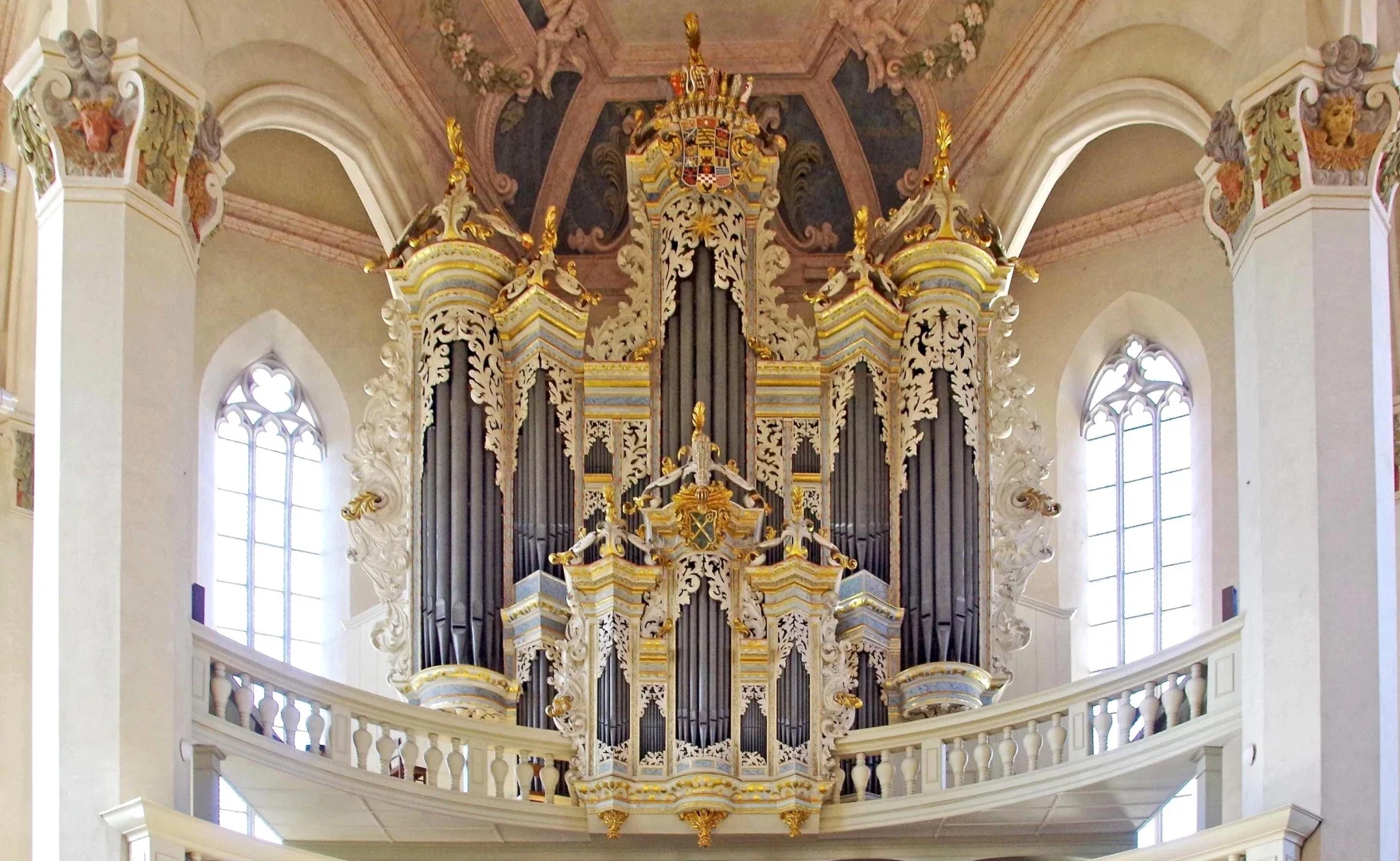
An organ built in the 1740’s that was played by Bach
As an adult, Bach worked professionally as an organist, church music director, and composer. One of his most esteemed positions was in the court of Prince Leopold. But his longest and most musically-prolific position was as music director at St Thomas Church in Leipzig, where he directed choirs, taught students, and composed music for church services every week. Bach served St Thomas’s from 1723 until his death in 1750, and was even buried within the church.
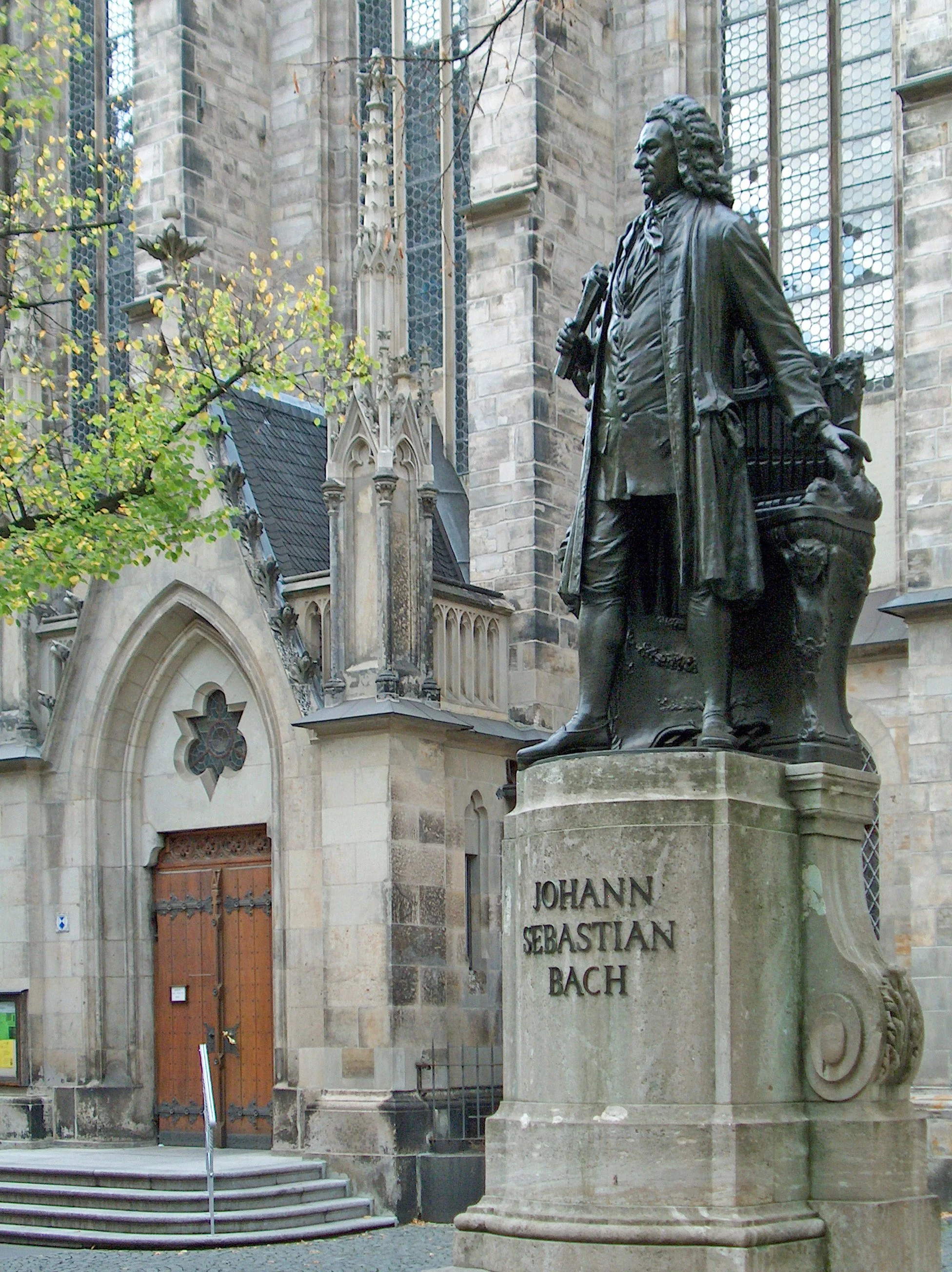
Statue of Bach outside St Thomas Church in Leipzig
Bach’s music remains a timeless marvel. Dive into his melodies and harmonies and you’ll find mathematical concepts like symmetry and patterns. But he was not entirely serious; in many of his pieces he hid musical riddles, such as melodies that spell out names using note letters or symmetrical phrases that read the same forward and backward!
Bach never sought fame in his lifetime, yet his influence echoes to this day. His music reminds us that great art grows from curiosity, discipline, and passion.
Bach Fun Facts
He wrote a cantata about coffee! Bach’s Coffee Cantata (BWV 211) tells the story of a young woman who refuses to give up her beloved daily coffee—even when her father insists. It’s basically a 1730s musical comedy about caffeine addiction!
He had a huge family. Bach had 20 children, though only about half survived to adulthood. Several became famous composers and musicians themselves, including Carl Philipp Emanuel Bach and Johann Christian Bach, who influenced Mozart.
He copied music by candlelight. As a boy, Bach was so eager to learn that he secretly copied forbidden music manuscripts by moonlight after his brother locked them away. That determination shaped his genius.
He once went to jail for changing jobs. When Bach tried to leave his post in Weimar to take a new position, his employer was so angry that he threw him in jail for almost a month! Bach used the time to compose.
He could improvise like no one else. Bach was a legendary improviser. He could take a theme given to him on the spot and spin it into a complex fugue instantly—something few musicians in history have matched.
JS Bach’s Greatest Hits
Toccata and Fugue in D Minor, BWV 565
You’ve probably heard this one before. It’s been used in countless movies, and is perfect for Halloween season!
Few pieces capture drama and power like Bach’s Toccata and Fugue in D Minor. Written for organ, it opens with a bold, storm-like flourish that almost seems to summon lightning. The “toccata” section shows off the performer’s technical skill with rapid, free-flowing runs and bold chords. Then comes the “fugue” - a complex, layered conversation between melodies that chase, overlap, and build toward thrilling intensity.
This is a playlist of many different musicians’ performances of the first 24 sections of The Well-Tempered Clavier on harpsichord (because the modern piano had not yet been invented when Bach wrote it!)
The Well-Tempered Clavier
In The Well-Tempered Clavier, Bach did something revolutionary: he composed 48 preludes and fugues, one in every major and minor key. At the time, tuning systems often made some keys sound unpleasant or “out of tune.” Bach’s collection demonstrated the potential of a “well-tempered” tuning, where every key could sing beautifully. In true Bach style, this technical experiment is also a masterpiece of musical variety and emotion. Each prelude has its own mood: some dance-like, some introspective, some stormy. Each is followed by a fugue, an intricate puzzle where voices weave together in perfect balance. Composers from Mozart to Chopin studied this book like a textbook of harmony and counterpoint. As you listen, try to follow how each voice enters, one after another, until they all interlock like gears in a finely crafted clock.
Brandenburg Concerto No. 3
Brandenburg Concertos
When Bach sent his six Brandenburg Concertos as a gift to a German nobleman, he may not have known he was creating one of the most enduring pieces of Baroque music. Each of the six concertos spotlights a unique group of instruments - violins, flutes, trumpets, oboes, and harpsichord - in what feels like a joyful conversation. Listen for how melodies pass back and forth between sections.
Brandenburg Concerto No 5
Each concerto has its own unique personality, but here we’ve linked Brandenburg Concerto No. 3 - bursting with joyful strings in constant motion - and No. 5, which features one of the earliest harpsichord solos. These videos also feature many baroque style instruments, so they may look a little different from your violin or cello!
Unaccompanied Suites for Cello
Bach’s six Unaccompanied Suites for Cello reveal his most intimate voice. With no orchestra, no harmony, and no partner instrument, the cello must speak entirely on its own - and yet, it sounds complete. Each of the six suites follows a similar structure: a Prelude followed by a series of Baroque dances. The Prelude of the First Suite, with its flowing arpeggios, is one of the most recognizable pieces ever written for the cello. It feels calm and hopeful. As the suites progress, they explore every emotion from lighthearted joy to meditative sorrow. Bach’s genius lies in how he makes a single line of music suggest multiple voices, as if the cello is thinking out loud.