School Readiness Starts Earlier Than You Think. Here's How Music Helps.
Most parents picture school readiness as a summer project. You buy the workbooks, practice letters, maybe drill counting to 100 a few times before the first day of kindergarten. But the truth is, readiness starts forming years earlier: in car seat sing-alongs, in banging on pots with a wooden spoon, in the piano lesson your third grader actually looks forward to on Tuesdays.
School readiness isn't really about how many letters a child can name. It's about the whole child: how well they listen, how they handle frustration, how comfortable they are trying something new in a room full of other kids. Music, it turns out, is one of the most natural ways to build all of that, and it starts quietly, joyfully, and long before parents even want to think about kindergarten.
What "School Readiness" Actually Means
When teachers talk about readiness, they're rarely talking about academics first. They mean things like:
Listening and following directions
Paying attention for a stretch of time
Communicating clearly with others
Managing big emotions in a healthy way
Solving problems
Cooperating with peers
Building language and early literacy
Developing independence and confidence
These skills are built gradually, through thousands of small, everyday experiences, and music is one of the richest sources of those experiences, starting far earlier than most parents expect.
Infancy: A Musical Foundation for Life
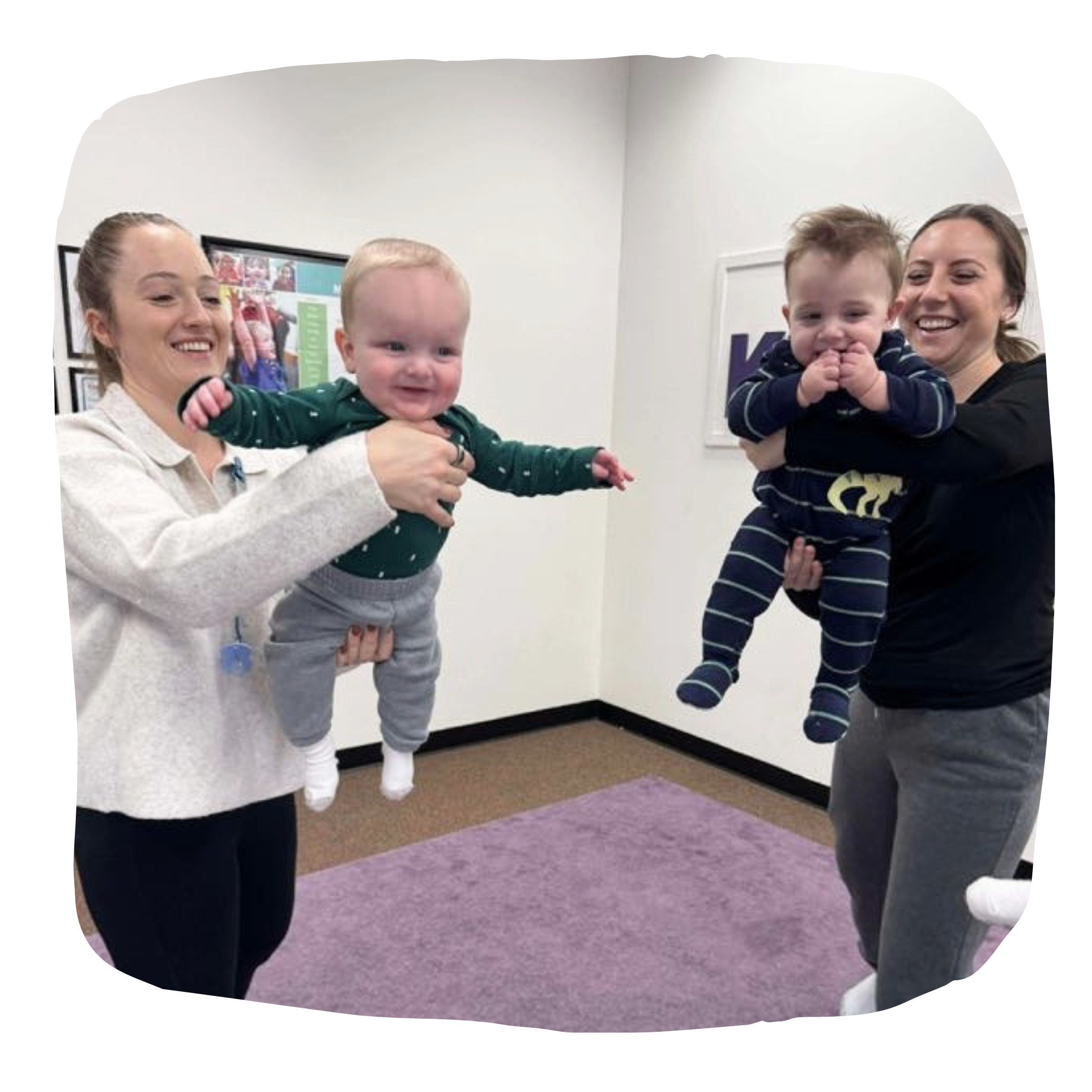
Even before a baby can talk, music is doing quiet, important work. Singing to an infant, bouncing to a beat, responding to their coos with a little melody: all of it builds language development, listening skills, early memory, and attention. It strengthens the bond between caregiver and child, and it helps babies start learning how to self-regulate, long before that's a skill they can name.
In those precious moments, none of this feels like "learning.” It feels like play. But those joyful little interactions are the building blocks everything else gets stacked on. And, play is how young children learn!
"I've noticed big developmental leaps in her language and socializing since beginning Kindermusik. It's something we both look forward to together every week." ~ Colleen, Kindermusik parent at The Harmony Garden
Toddlers: Learning by Doing
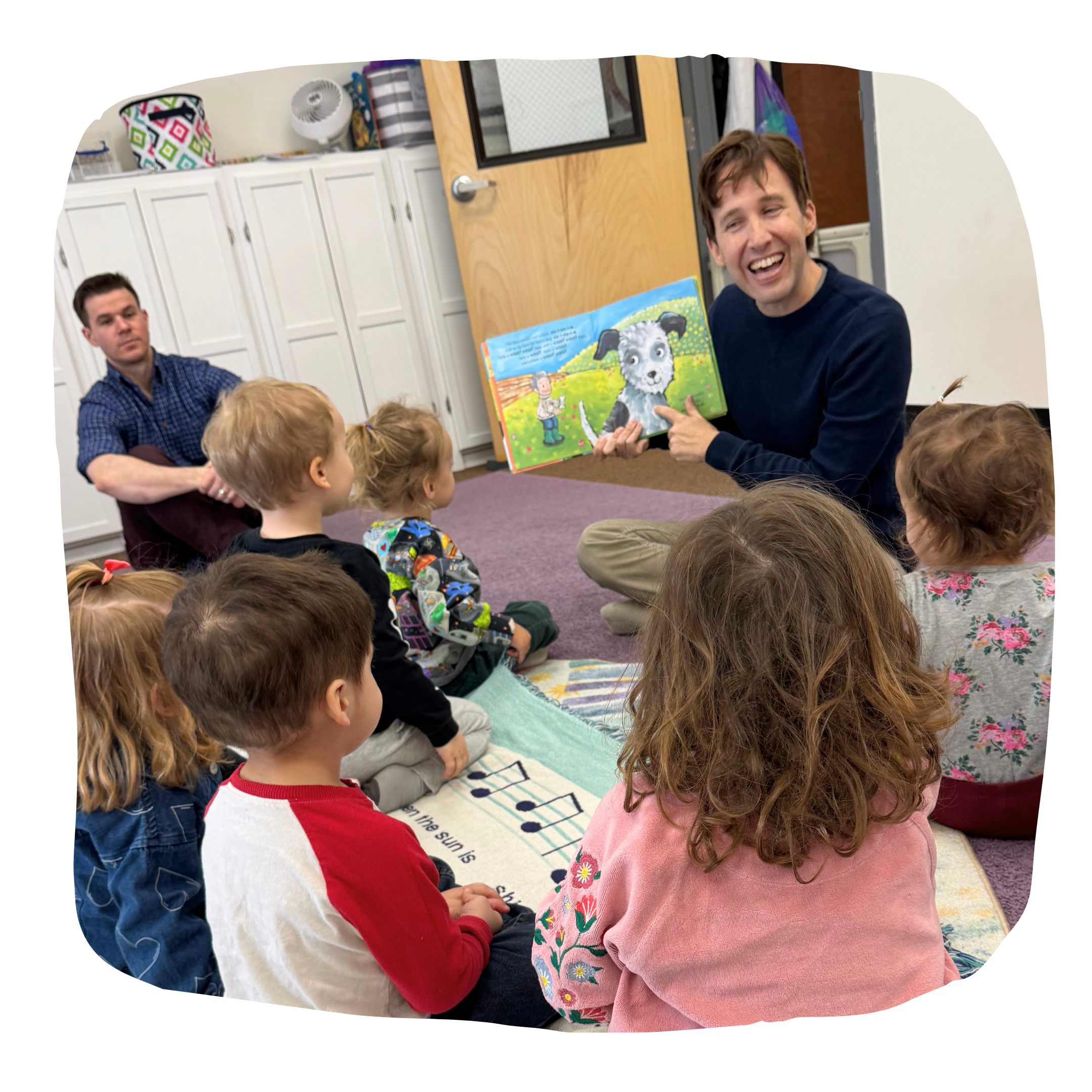
Ask any parent of a toddler and they'll tell you the same thing: toddlers don't sit still and absorb information. They learn with their whole bodies. And music meets them right there, in the middle of all that gleeful toddler chaos.
And in a Kindermusik class for toddlers, the playful combination of music and movement helps young children develop:
Following simple directions
Taking turns
Growing vocabulary
Coordination
Problem-solving
Early math concepts (counting beats, patterns)
Creativity
Emotional expression
Music class is a low-pressure way for toddlers to practice the exact skills they'll need in preschool, without realizing they’re doing big brain work.
"(Kindermusik is) such a great way for children to begin socializing and learning the pure joy that music can provide." ~ Alicia, Kindermusik parent
Parents notice the turn-taking especially. One mom told us her three-year-old has learned to wait for the instrument and share it with the class, and sings the class songs at home and in the car, even days after class!
Preschoolers: Getting Ready for Kindergarten
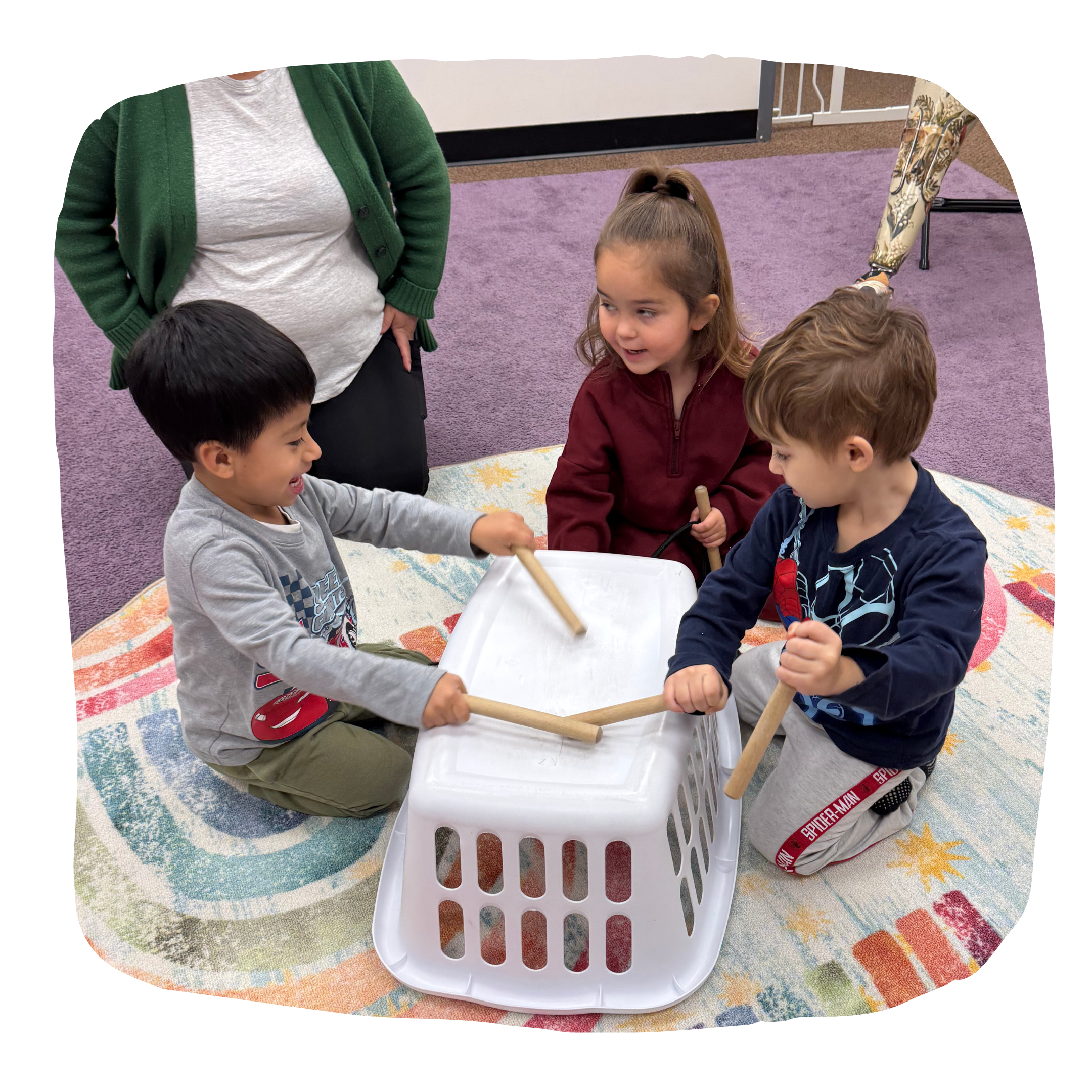
Preschool is typically when readiness starts to feel real to parents. And it's where music quietly does a lot of heavy lifting in helping children with:
Rhyming
Listening comprehension
Sequencing
Pattern recognition
Self-control
Working memory
Social skills
Confidence.
Many kindergarten teachers will tell you these developmental skills matter just as much - if not more than - knowing their letters and numbers.
"I love how Kindermusik has helped my son grow confident in his ability to follow along and participate in class, and even come up with his own ways of expressing music!" ~ Deanna, Kindermusik parent
Ongoing Benefits of Music
Of course, music doesn't stop paying off once a child starts school. If anything, the benefits deepen.
Kids in ongoing music lessons tend to build stronger concentration, organization, and perseverance. They practice time management. They get support for reading and mathematical thinking.
And they develop something harder to teach directly: a growth mindset, the sense that getting better at something is possible if you keep trying.
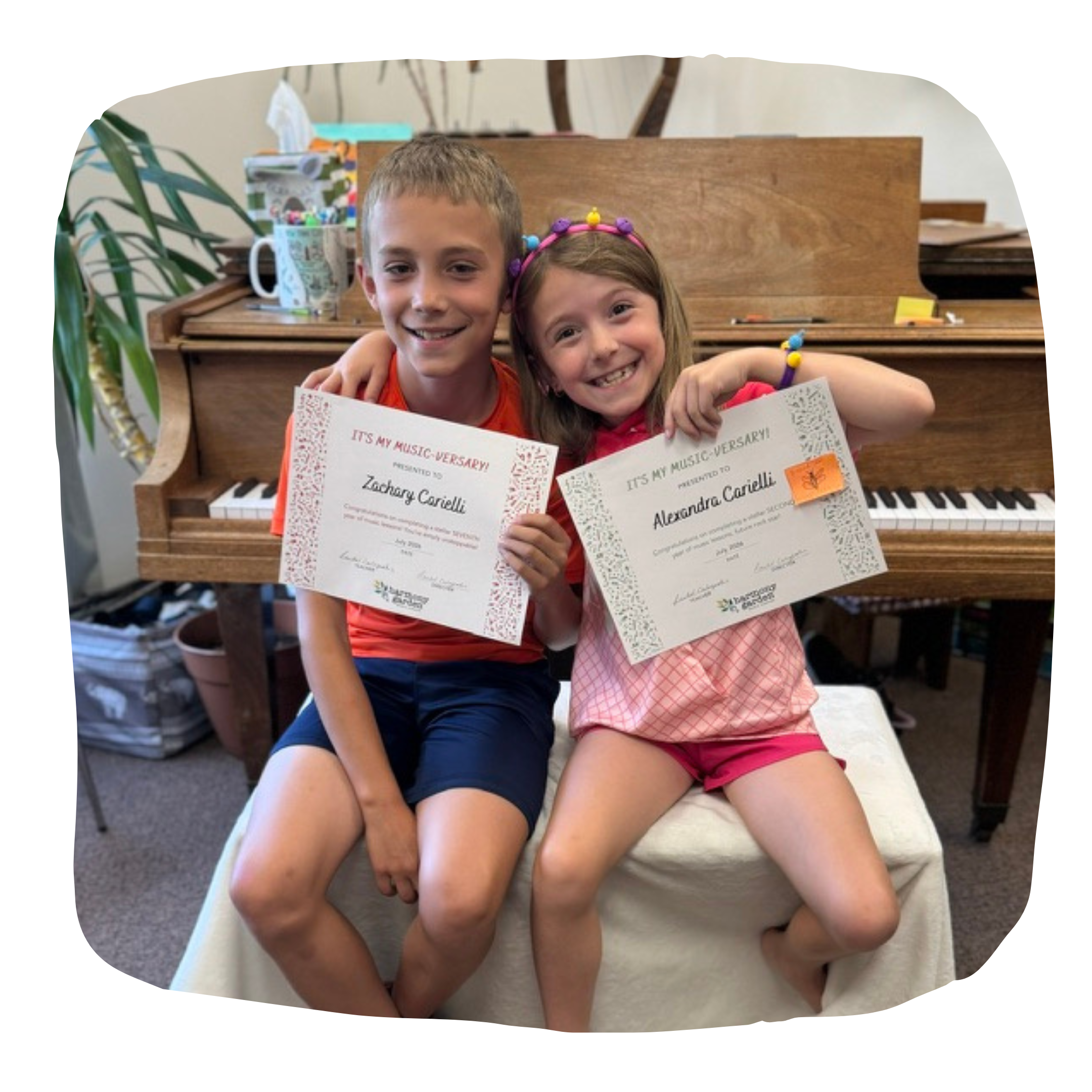
One Harmony Garden parent's daughter has taken guitar lessons for six years with the same teacher, who she describes as patient, knowledgeable, and willing to set the lesson plan aside to follow her daughter's lead on a song she's excited about. That flexibility, she says, is exactly what's kept her daughter's love of music growing!
Music Develops the Whole Child at Once
Here's what makes music unique: it rarely works on just one skill at a time.
When a child sings a song, keeps a steady beat, listens for their cue, waits for a turn, and moves along with the group, they're building language, coordination, executive function, self-regulation, and social skills, all in the same three minutes.
Most activities isolate one skill. Music tends to develop several at once, which is why we call it a superfood for a child’s brain, body, and heart.
It's Not Just About Getting Ready for School
School readiness matters, but it's not the whole point.
Childhood shouldn't be treated as one long runway toward the next milestone. It’s a precious time to explore, discover, and grow as a human. Music nurtures this, and allows children to:
Find genuine joy in learning
Express themselves
Build real relationships
Develop confidence
Feel the satisfaction of accomplishment
Discover what they're actually good at
They matter in the classroom, but they matter a lot more outside of it, too.
The Bottom Line
Whether your child is an infant hearing lullabies in your arms, a preschooler experimenting with a xylophone, or an elementary student finding joy and confidence in piano lessons, music is quietly building the skills that carry them through school and beyond. Every song, every lesson, every off-key sing-along in the car is a building block towards an amazing, fulfilled life.
Harmony Garden FAQs
What class is best for my child?
At The Harmony Garden, we are delighted to offer a carefully-curated suite of musical programs suited for learners of all ages: newborn through adults!
Kindermusik for newborns through age 5 -The world’s leading music and movement experience, Kindermusik nurtures every area of development in newborns through age 5 through the joy of music, family, and community. The Harmony Garden is honored to be among the top 5% of Kindermusik studios worldwide since 2017.
Piano Explorers for ages 4 & 5 years - Beginning piano study in a group setting harnesses your child’s natural musicality, creativity, and need to learn socially to create a rock-solid musical foundation that’s age-appropriate and highly motivating.
Private Music Lessons for ages 6 and up - Whether you are 6 or 60, and whether you love classical or rock, jazz or show tunes, there is an instrument and style for you! Private instruction on your favorite instrument makes dreams come true!